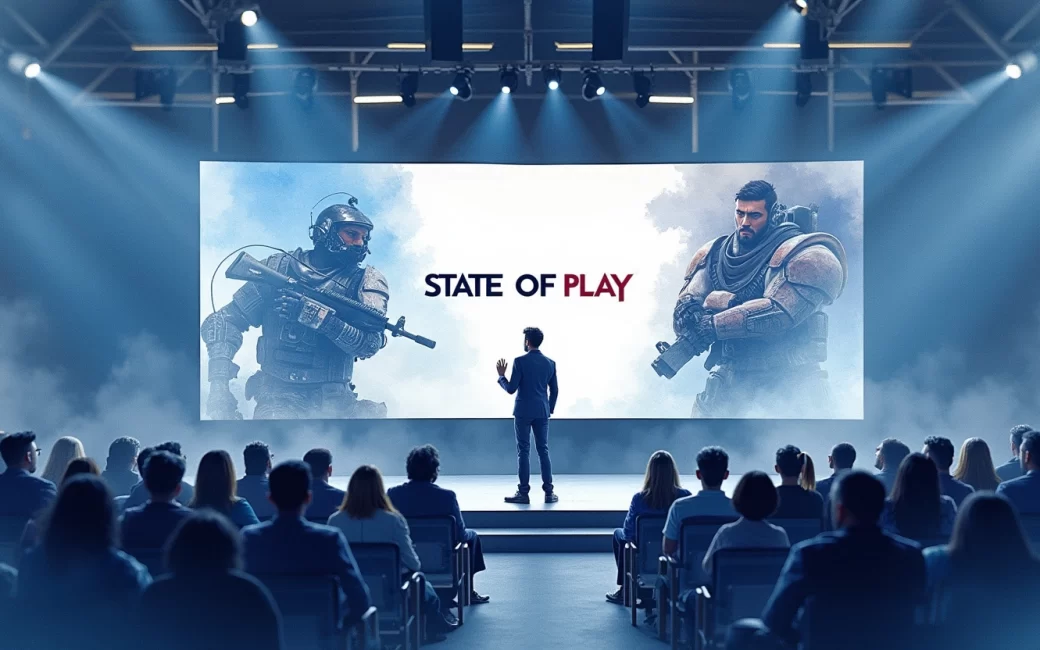
Publisher holds a showcase such as State of Play
News in gaming rarely appears at random — it clusters around scheduled events. When a platform holder or publisher runs a showcase like State of Play, the sequence that follows is predictable enough to plan around rather than react to.
- The publisher holds the showcase, a livestream with a fixed runtime and a lineup kept secret beforehand.
- Release dates, trailers and new titles are announced inside that window, often several at once.
- Consumer outlets such as IGN and Polygon publish date and preview coverage within hours, sorting announcements into what's confirmed versus teased.
- Reviews follow later, timed to the actual launch rather than the announcement.
Knowing this order means a reader chasing "what's new in gaming" can check a showcase calendar instead of refreshing a feed all week. The spike in stories is a function of the event, not a sign that more is happening in the industry generally — it's the same volume of news, delivered in a burst.
Studio faces cost pressure, layoffs or closure
When a studio hits cost pressure, the visible symptom is usually a delay, not a headline about the layoff itself. Projects slip first, and the business reason often surfaces only later, if at all.
That sequence runs in the other direction from a showcase: cause, then delay, then coverage.
- A studio faces financial pressure, restructuring or closure internally.
- Projects in development slip, and a release date gets pushed — sometimes with no public explanation at the time.
- Consumer press covers the delay as a scheduling story: new date, brief reason given, reaction from players.
- Trade press such as GamesIndustry.biz and Game Developer explains the underlying cause — funding, layoffs, a publisher's changed roadmap — that consumer coverage doesn't usually chase down.
Reading a delay this way changes what the headline means. A pushed date on its own tells a reader almost nothing; the same date read alongside trade coverage of the studio's condition tells them whether the slip is routine polish time or a symptom of something structural.
Reader asks whether the industry is declining
Whether the industry is "falling" isn't answerable from a single headline, because no single outlet type covers both halves of the question. Business health and player activity are tracked separately, by different press, and a reader needs both.
The method:
- Check platform-holder and publisher financial results, plus layoff and closure reporting, in trade press like GamesIndustry.biz and Game Developer — this is where headcount and revenue changes actually get reported.
- Compare that against release-slate activity and player-facing coverage from consumer press such as IGN, Polygon and GamesRadar+ — a busy release calendar and strong review scores can coexist with a contracting business side.
- Weigh the two together rather than picking one. A wave of layoffs at a publisher doesn't mean fewer games are shipping; a quiet showcase season doesn't mean studios are shrinking.
This is a repeatable check, not a one-time verdict — the answer shifts every reporting quarter and every layoff round, so it's worth re-running rather than trusting a headline from months back.
Review
A review is the critical verdict published after a game ships, and it's the most consistent recurring content type in gaming coverage. Consumer outlets like IGN, GamesRadar+ and Game Informer run reviews as a core beat, timed to launch day or shortly after an embargo lifts.
Reviews answer a narrower question than most people assume: is this specific version, on this platform, worth playing now. They don't cover the business context behind the game's existence — that's a separate beat, covered elsewhere.
Release date
A release date is the single piece of information that drives the most individual game news items, because it's the fact readers check most often and the one publishers change most often. An announced date can move for reasons ranging from certification delays to studio restructuring, and each change generates its own cycle of coverage.
The distinction worth keeping in mind: an announced date from a publisher's own press material is a commitment, while a date reported ahead of any announcement is a leak or rumour, and the two carry very different reliability. Consumer outlets generally flag which is which, but the label is easy to miss if a reader is skimming.
Games industry news
"Games industry news" covers three different kinds of development that get lumped together in a single feed: business news (funding, layoffs, acquisitions), product news (release dates, patches, hardware), and cultural news (community reaction, awards, controversies). They move at different speeds and get covered by different press.
Business developments are covered on a quarterly rhythm, tied to earnings calls. Product news is event-driven, tied to showcases and launch windows. Cultural news is reactive and can spike at any time. Treating all three as one undifferentiated stream is why a week can feel simultaneously slow and overwhelming — the categories aren't actually competing for the same attention.
Trade press (GamesIndustry.biz, Game Developer)
Trade press is written for people working in the industry, not primarily for players, and that shows in what it covers. GamesIndustry.biz and Game Developer report on studio funding, layoffs, publisher strategy and platform-holder financial results — the material a reader needs to answer questions about the industry's health rather than about a specific game.
This is the correct place to check when a delay or a closure needs context, since trade outlets are more likely to have sourced the business reason directly rather than reporting the scheduling change alone.
Consumer games press (IGN, Polygon, GamesRadar+, Game Informer)
Consumer games press is built around the individual game rather than the business behind it. IGN, Polygon, GamesRadar+ and Game Informer cover reviews, release dates, previews and showcase reactions — the day-to-day feed most readers mean when they say "gaming news."
The tradeoff is depth on the business side: these outlets will tell a reader that a date moved, and often why the publisher says it moved, but rarely dig into the studio's internal condition the way trade press does.
Mainstream business press
General news desks pick up gaming as a market story, not a player story. Coverage from outside the specialist and trade outlets tends to appear only when gaming intersects with something a wider audience already tracks — a large acquisition, a stock swing, or a regulatory action — rather than as a beat covered day to day.
This makes general-audience coverage a useful filter on its own: if a gaming story has crossed into mainstream headlines, it has usually cleared a size threshold that most trade or consumer stories never reach.
Publisher showcase (State of Play)
A showcase is a scheduled livestream, run by a platform holder or publisher, built to reveal announcements and dates in a single concentrated event rather than piecemeal. State of Play, run by Sony, is the recurring example, and its unpredictable but roughly periodic scheduling is why gaming news arrives in bursts rather than a steady drip.
The practical use of knowing this is that a reader who wants to stay current doesn't need to check feeds daily — checking around known or rumoured showcase windows covers most of the announcement volume for a given stretch.
Delay
A delay is a pushed release date, and it is the most heavily covered form of schedule news precisely because dates are the fact readers check most and publishers change most often. Delays recur often enough around specific franchises — Grand Theft Auto being the most persistent example — that the announcement of a new date becomes its own news cycle independent of the game's content.
The distinction that matters when reading delay coverage is the same one that matters for any announced date: whether the new date comes from the publisher directly or is being reported ahead of confirmation. Consumer press usually covers the announcement itself; trade press is more likely to explain why it happened.
What is happening with the gaming industry?
Right now, the industry is running two stories in parallel that don't always show up in the same headline: cost-cutting and restructuring on the business side, tracked mainly by trade press, and a steady release calendar of announcements, delays and reviews on the consumer side. Reading only one side gives an incomplete picture — a quiet quarter for showcases doesn't mean studios are stable, and a heavy run of layoff coverage doesn't mean fewer games are launching.
The way to keep up without getting lost is to separate the beats: check GamesIndustry.biz or Game Developer for the business and workforce side, and IGN, Polygon or GamesRadar+ for release dates, previews and reviews. Pick one trade outlet and one consumer outlet, follow both for a few weeks, and the pattern of when and why stories break will start to explain itself.